



As a certified appraiser, I constantly work on developing myself. That’s why I regularly visit auctions, museums, and exhibitions. After all, you never stop learning. Last week, I visited the Stedelijk Museum Breda, where the beautiful exhibition The Nassaus of Breda is on display. One of the themes is portrait art – and that’s exactly what makes my heart race.
What portraits tell us about jewellery
Over the years, I have built up a large collection of portraits. Sometimes I buy a painting at an auction, but usually I photograph special pieces in museums.
Portraits are actually a valuable source for dating antique jewelry. In combination with clothing, hairstyles, and accessories, they show which styles were popular in a particular period. This way, you not only get a better idea of the dating of a piece of jewelry but also of the duration and spread of a fashion trend.
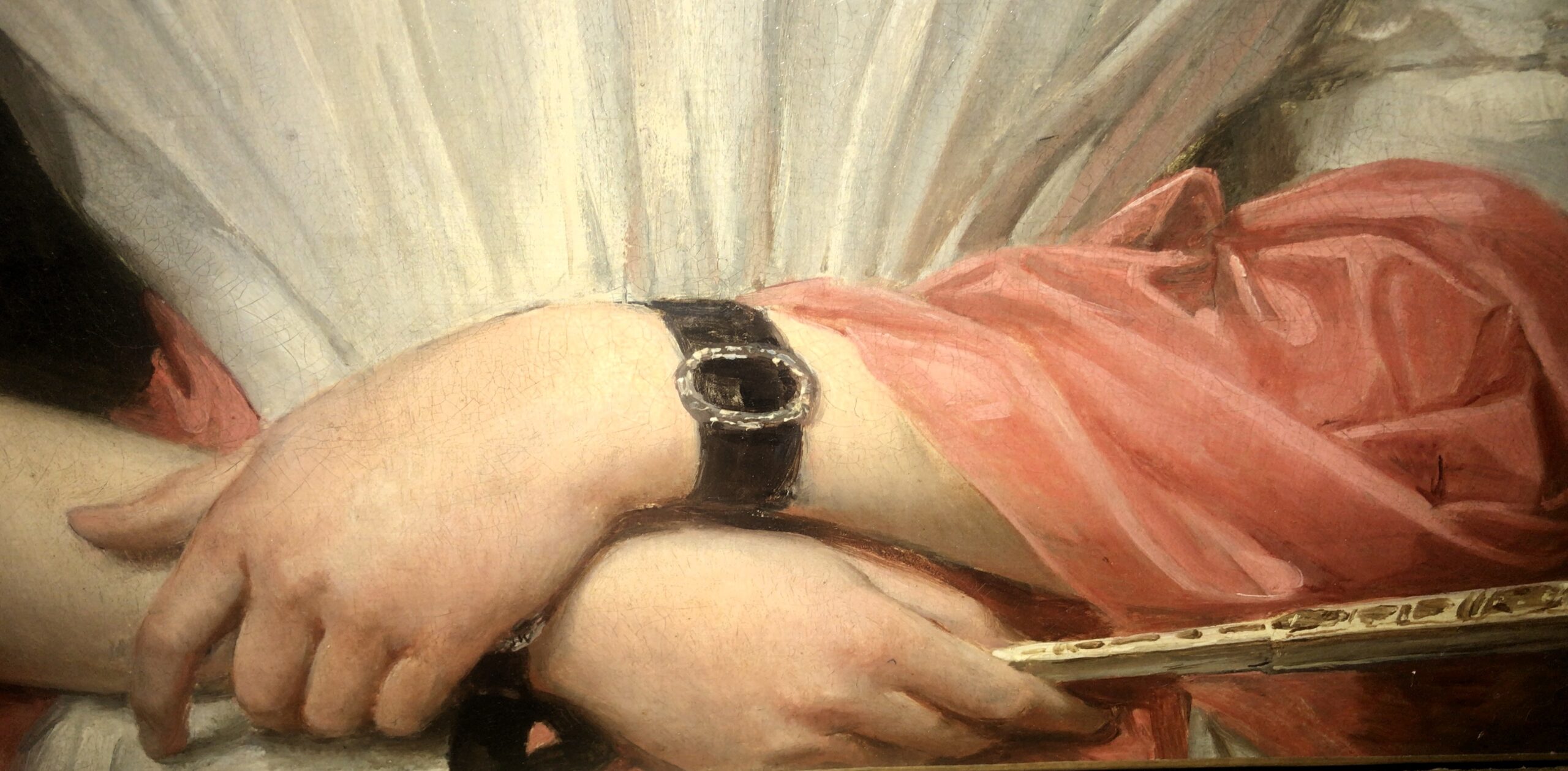
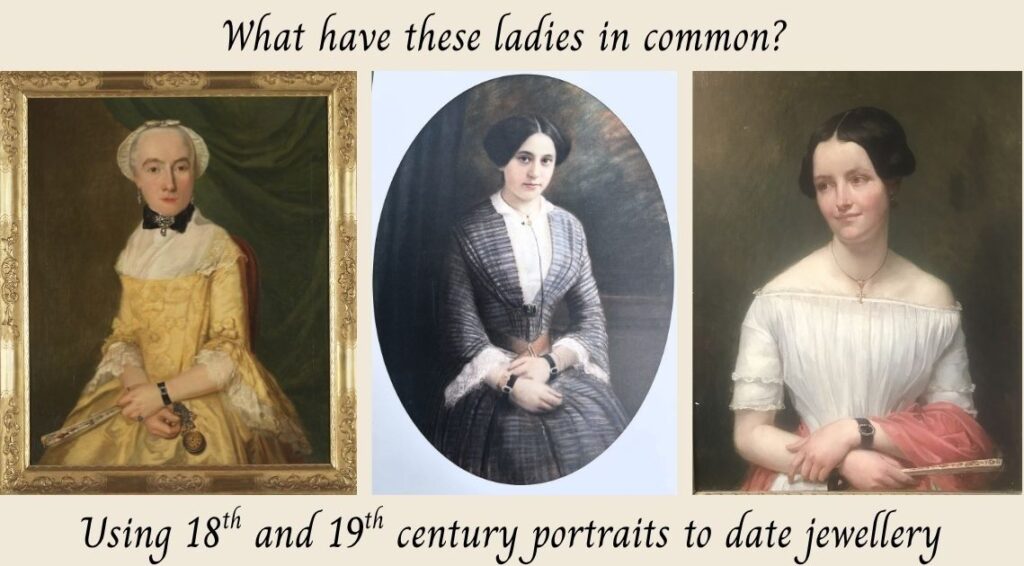
In the museum shop, my eye caught a postcard featuring a portrait of Caroline De Roy van Zuydewijn from around 1850. She is wearing two identical black – presumably velvet – bracelets with a clasp or buckle set with white stones. Whether they are diamonds or rhinestones is hard to tell, but the design immediately caught my attention. This was because I myself own a portrait of a young French lady, painted in 1851, who is wearing almost the same bracelets. Both women seem to be about the same age, and the jewellery is strikingly similar. While preparing an online course, I then discovered yet another portrait. This time of Geertruida van Nisse from Goes, painted between 1770 and 1790. She also wears a similar black bracelet with a buckle. That raises interesting questions. Was this design in fashion for nearly a century? Or did it perhaps experience a revival around 1850? Maybe in the eighteenth century it was common to wear one bracelet, and by the mid-nineteenth century worn correctly just like a pair.
Do you have such a clasp?
The fabric or velvet strap will in most cases not have withstood the test of time. The clasp itself is often made of metal or silver and can therefore still have been preserved, either loose in a jewellery box or inherited. Do you have such a clasp at home, or are you unsure whether your piece is from this period? Then I would love to get in touch with you. Such finds not only help to better understand the history of these pieces of jewellery, but can also be surprisingly valuable. Feel free to send me a photo or contact me without obligation. Maybe your clasp carries a special story. For exceptional pieces, I can, if desired, come to you for an expert assessment or appraisal.
Photos: Portrait 1 is Geertruida van Nisse, Goes, around 1770-1790, Netherlands Institute for Art History, no. C1522. Source: Bekijk alle beelden van: www.beelbank.cultureelerfgoed.nl
Portrait 2 is Caroline de Roy van Zuydewijn, Breda, around 1850, Stedelijk Museum Breda. Source: De Nassaus van Breda – Stedelijk Museum Breda
Portrait 3 is an unknown French woman, probably from the Savoie, Alps. Private collection.